

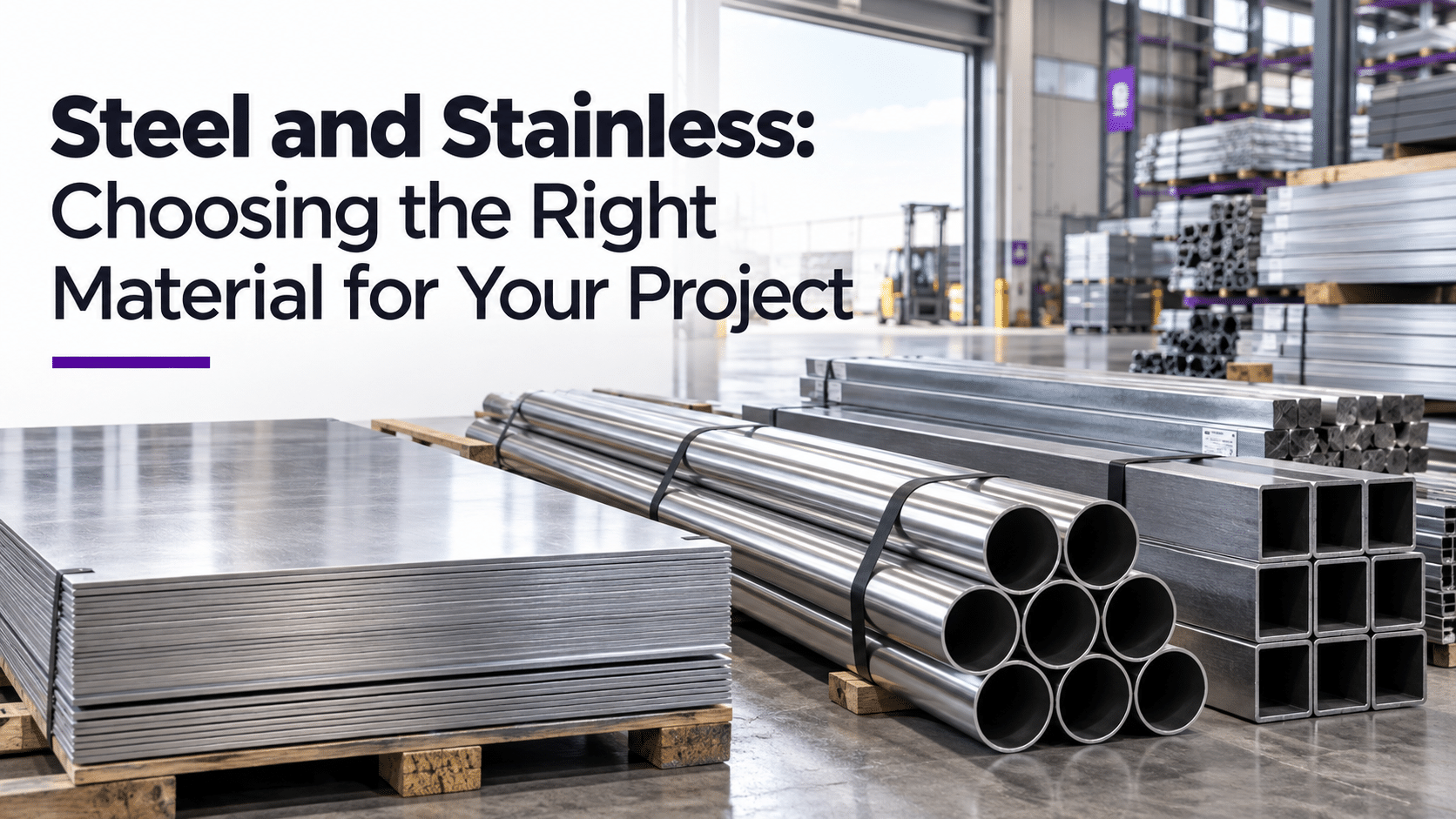
Steel and Stainless: Choosing the Right Material for Your Project
Choosing the right metal product is important for construction, fabrication, manufacturing, and industrial projects. Different materials offer different levels of strength, corrosion resistance, durability, and flexibility. Understanding the difference between steel and stainless can help you select the right product for your project and avoid unnecessary cost or performance problems.
Both materials are widely used, but the best option depends on where the material will be installed, how much stress it will handle, and whether it will be exposed to moisture, chemicals, or outdoor conditions.
What Is Stainless Steel?
Stainless steel is a metal alloy known for its corrosion resistance and clean appearance. It contains chromium, which helps form a protective layer on the surface and reduces the risk of rust.
Because of this feature, stainless steel is commonly used in environments where moisture or hygiene is important. You may see it in kitchens, food processing facilities, marine applications, architectural projects, handrails, equipment, and industrial systems.
Stainless steel is also popular because it can offer a polished, modern finish while still providing strong structural performance.
Understanding Steel and Stainless

The main difference between stainless and steel is how they respond to corrosion and environmental exposure. Standard steel is strong, practical, and widely used across construction and industrial work. Stainless steel adds greater resistance to rust, making it useful where long-term appearance and durability are important.
Steel may be more suitable for structural frameworks, general fabrication, supports, and projects where the material will be painted, coated, or protected.
Stainless steel may be preferred for exposed applications, decorative structures, wet environments, and projects where maintenance needs to be reduced.
What Is an SS Steel Tube?
An SS steel tube is a stainless steel tubular product used for structural, mechanical, and fabrication purposes. It may come in round, square, or rectangular forms depending on the required application.
SS steel tube is often selected when both strength and corrosion resistance are needed. It can be used for railings, frames, architectural structures, food processing equipment, machinery, and custom fabrication.
The correct tube size, wall thickness, and grade should always be chosen according to the expected load and working environment.
Common Uses of Stainless Steel Tubing
Stainless steel tubing is one of the most versatile products available for fabrication and construction. Its smooth appearance makes it suitable for visible structures, while its corrosion resistance allows it to perform well in demanding environments.
Common uses include handrails, balustrades, furniture, equipment frames, automotive components, marine structures, and industrial systems.
Stainless steel tubing can also be easier to maintain than some other metals because its surface does not normally require frequent painting or protective coatings when used in suitable conditions.
When Steel Tubing Is the Better Choice

Steel tubing is widely used in structural and fabrication work because it provides strength, consistent dimensions, and practical design options.
Square and rectangular steel tubing are especially useful for frames, supports, fences, gates, machinery, trailers, shelving, and general construction. Their flat surfaces make them easier to join, weld, and connect to other structural components.
Steel tubing can be a practical option when corrosion resistance is not the main priority or when the material will receive additional surface protection such as paint, galvanising, or powder coating.
How to Choose Between Stainless Steel and Steel Tubing
The right material depends on your project conditions. If the product will be exposed to water, salt, chemicals, or outdoor weather, stainless steel may provide better long-term corrosion resistance.
For indoor structural work or general fabrication, steel tubing may be a more practical choice. Budget, appearance, strength, maintenance, and fabrication requirements should all be considered before making a decision.
It is also important to check dimensions, wall thickness, finish, and material grade before ordering.
Final Thoughts
Both steel and stainless products play an important role in construction, fabrication, and industrial work. Stainless steel offers excellent corrosion resistance and a clean finish, while standard steel provides reliable strength and versatility for a wide range of structural applications.
Whether you need stainless steel, SS steel tube, stainless steel tubing, or steel tubing, choosing the right material can improve performance, durability, and overall project efficiency.

Related Posts