

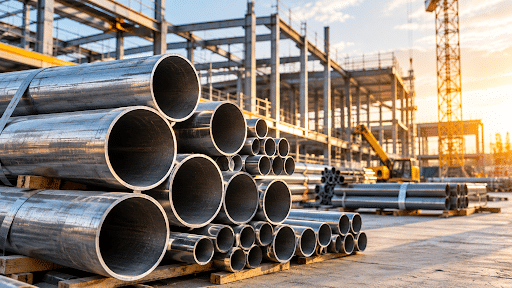
Stainless Steel Pipe and Other Essential Steel Products
Steel products are widely used across construction, manufacturing, engineering, fabrication, and infrastructure projects because of their strength, durability, and versatility. From structural frameworks to plumbing systems and custom fabrication, choosing the right steel product can have a major impact on performance and long-term reliability. One of the most commonly used materials is stainless steel pipe, which is valued for its resistance to corrosion, strength, and ability to perform in demanding environments.
Understanding the differences between pipe, tube, and other steel products can help businesses, contractors, and fabricators choose materials that are better suited to their specific requirements.
What Is Stainless Steel Pipe?
Stainless steel pipe is a hollow cylindrical product commonly used to transport liquids, gases, and other materials. It is also used in structural and fabrication applications where strength and corrosion resistance are important.
One of the main advantages of stainless steel is its ability to resist rust and corrosion better than many standard steel products. This makes it suitable for applications exposed to moisture, chemicals, or changing weather conditions.
Stainless steel pipe can be found in industries such as construction, food processing, manufacturing, plumbing, marine projects, and industrial engineering.
A steel pipe is often selected for applications where strength and durability are important. It may be used for structural support, fluid transportation, fencing, fabrication, and mechanical systems.
Different steel pipe options may vary in diameter, wall thickness, finish, and material grade. Selecting the correct type depends on the load, environment, pressure requirements, and intended use of the project.
For structural applications, steel pipe can provide dependable support while maintaining a relatively simple shape that is easy to work with during fabrication and installation.
Understanding Metal Pipe Applications
The term metal pipe can refer to piping made from several different metals, including stainless steel, carbon steel, aluminium, and galvanised steel. Each material offers different performance characteristics.
For example, stainless steel may be preferred where corrosion resistance is important, while other types of metal pipe may be selected for cost efficiency, structural strength, or specific fabrication requirements.
Metal pipe is widely used in commercial, industrial, and residential projects. Common applications include handrails, frameworks, plumbing systems, supports, machinery components, and outdoor structures.
When to Use Round Tube
A round tube may look similar to pipe, but the two products are commonly chosen for different purposes. Pipe is generally associated with transporting liquids or gases, while round tube is often used in structural, mechanical, or decorative applications.
Round tube is frequently used in fabrication because of its clean appearance and balanced strength. It can be found in furniture, handrails, frames, automotive components, equipment, and architectural structures.
When selecting between steel pipe and round tube, it is important to consider dimensions, wall thickness, load requirements, and how the material will be used in the final project.
Steel products are not limited to pipe and tube. Mesh is another versatile material used across construction, fencing, fabrication, agricultural, and industrial applications.
Mesh is typically formed from intersecting wires or steel sections that create an open grid pattern. This structure can provide strength while allowing airflow, visibility, or drainage.
Galvanised mesh can also offer additional resistance to corrosion, making it useful for outdoor applications. Depending on the design and specification, mesh may be used for fencing, barriers, cages, screens, guards, storage systems, and reinforcement.
Choosing the Right Steel Product
Selecting the correct steel product starts with understanding the demands of the project. Factors such as environment, expected load, exposure to moisture, fabrication requirements, dimensions, and long-term maintenance should all be considered.
For example, stainless steel pipe may be a strong choice for environments where corrosion resistance is a priority. Steel pipe may be suitable for structural or industrial uses, while round tube can work well for fabricated frames and architectural applications. Mesh can provide a practical solution when strength and an open structure are both required.
Final Thoughts
Steel remains one of the most useful materials for construction, manufacturing, fabrication, and industrial projects. Products such as stainless steel pipe, steel pipe, metal pipe, round tube, and mesh each serve different purposes and offer their own advantages.
Choosing the right product can improve durability, performance, safety, and overall project efficiency. By understanding how each steel product is commonly used, buyers and contractors can make more informed material decisions for both small and large-scale projects.
Read More: Steel Mesh for Australian Projects: Choosing the Right Option

Related Posts